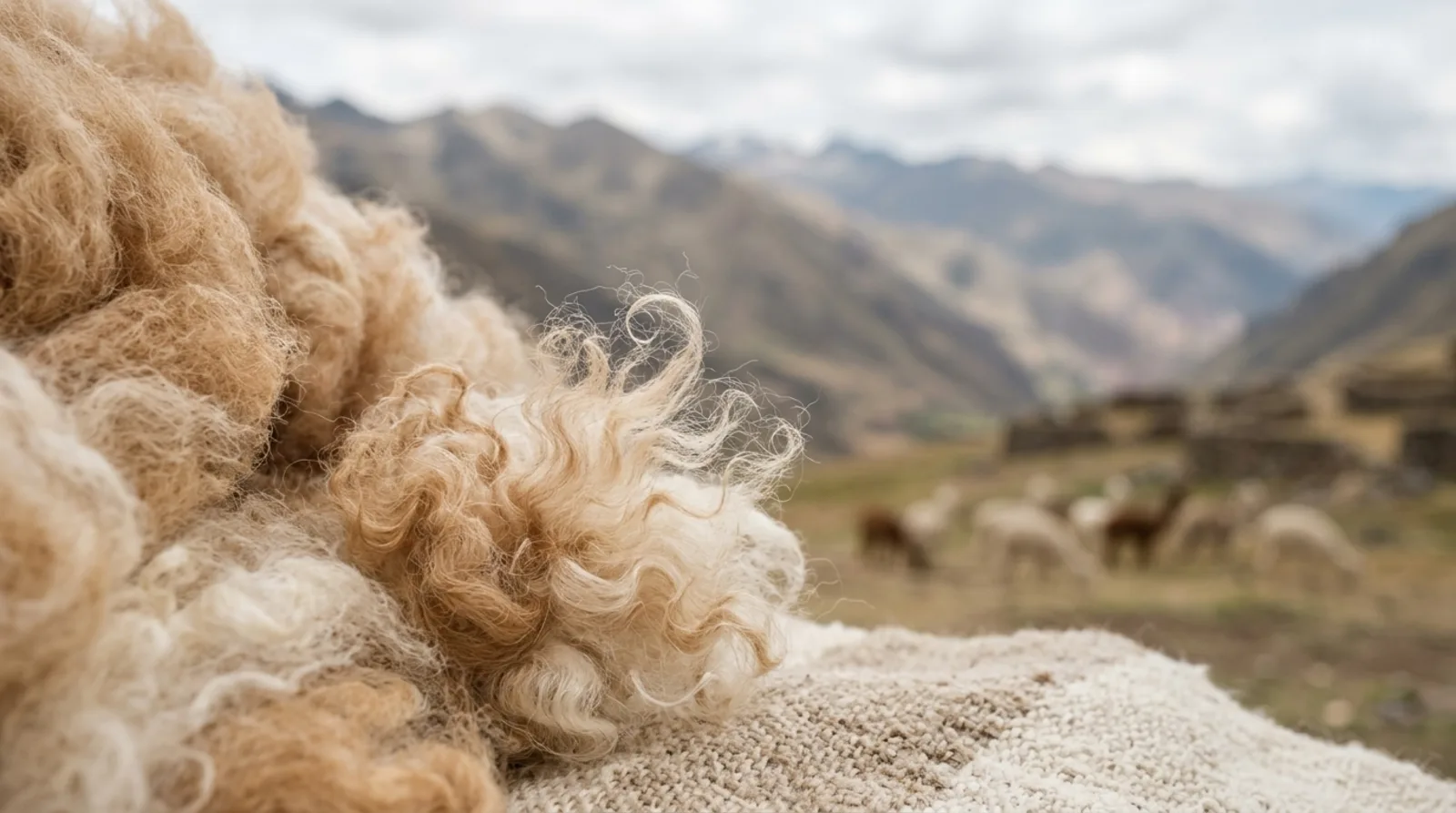
Baby alpaca is not the age of the animal but a fineness grade of the fibre: wool fibres up to 22.5 microns in diameter. Such fibre mostly comes from an alpaca's first shearing, but also from the softest part of an older animal. The result is a wool finer than ordinary merino, free of lanolin, and thanks to its hollow fibre warmer than the same weight of sheep's wool.
The micron number decides whether a hat itches. Below are the numbers we use ourselves when choosing products.
Microns: the fibre grades in numbers
In Peru alpaca fleece is sorted by fibre diameter. The lower the number, the softer the fibre. Human skin starts to feel a fibre as prickly at around 30 microns, so the difference between grades is directly noticeable.
| Grade | Fibre diameter | How it feels |
|---|---|---|
| Royal alpaca | up to 19 µm | rare, close to cashmere |
| Baby alpaca | up to 22.5 µm | silky, rarely itches, our scarves and sweaters |
| Superfine alpaca | 23 to 26.5 µm | soft, everyday knitwear |
| Adult / huarizo | over 26.5 µm | hard-wearing, socks and rugs |
For comparison: fine merino sits at 19 to 21 µm, cashmere at 14 to 19 µm, ordinary sheep's wool at 25 to 40 µm. Baby alpaca is therefore in the same softness class as merino, but the fibre is built differently, and that makes the difference in warmth.
Why alpaca is warmer at the same weight
Alpaca fibre is partly hollow. Inside the fibre are air pockets that act as insulation, like the down in a puffer jacket. Sheep's wool fibre is solid. That is why a thin alpaca knit holds the same warmth as a much thicker woollen one, and a baby alpaca scarf weighs less than the eye expects.
The second difference is lanolin. Sheep's wool carries lanolin, a natural wax that has to be washed out and that some people react to. Alpaca has none. That is no guarantee against allergy, but many people who find wool itchy wear alpaca without trouble.
Third: alpaca fibre is smooth and lacks dense scales, so it pills far less and does not felt as easily.
Baby alpaca vs merino vs cashmere
| Baby alpaca | Merino | Cashmere | |
|---|---|---|---|
| Fineness | up to 22.5 µm | 17 to 23 µm | 14 to 19 µm |
| Warmth per weight | high (hollow fibre) | medium | high |
| Lanolin | no | yes | no |
| Pilling | low | medium | heavy |
| Durability | high | medium | low |
| Price | medium | low to medium | high |
The honest summary: cashmere is softer, but wears out faster and costs several times more. Merino is cheaper and works well as a base layer, where wicking matters. Baby alpaca wins where you need a warm, light layer that rarely itches and lasts for years: hats, scarves, sweaters.
Where our wool comes from
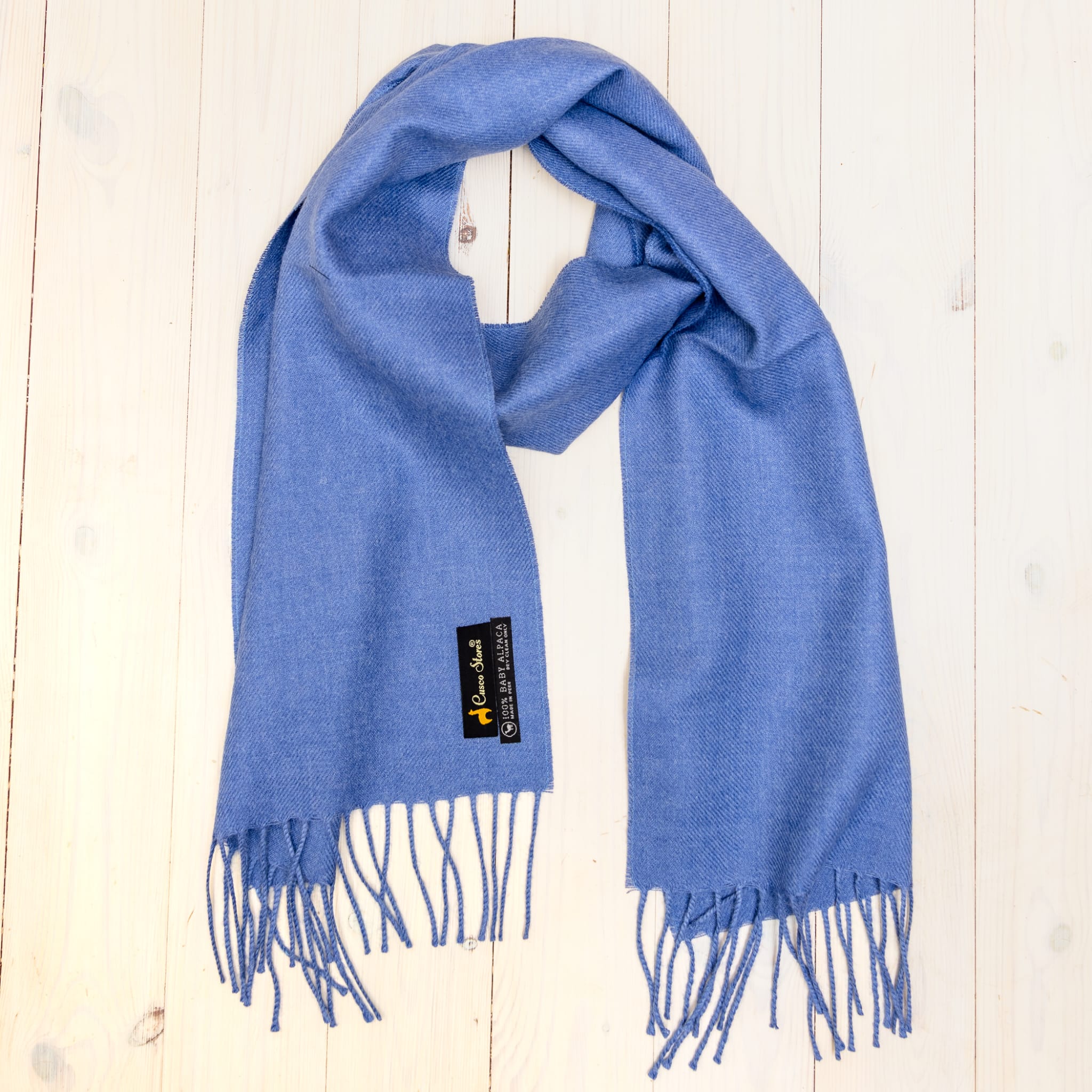
Alpacas live in the Andes at 3500 to 5000 metres, where the days are hot and the nights cold. The fibre evolved for that climate. Our products come from partners in the Cusco region of Peru whom we have worked with from the start. Shearing happens once a year and does not harm the animal. Read how we choose our partners.
Frequently asked questions
Does baby alpaca wool itch?
Generally not. Baby alpaca fibre is typically 22.5 microns or finer, and the prickly feeling usually starts from 30 microns. Very sensitive skin may notice a thicker knit; a silky scarf or hat is the gentler place to start.
Is alpaca wool warmer than merino?
At the same weight, yes, because alpaca fibre is partly hollow and holds more air. Merino in turn wicks moisture slightly better, so either works as a base layer.
Is alpaca wool suitable for allergy sufferers?
It depends on the person. Alpaca has no lanolin, the wool wax in sheep's wool that some people react to, and many people bothered by wool find it gentler. There is no guarantee, though: with a known wool allergy, try a small piece first or ask a doctor.
How do I wash a baby alpaca knit?
By hand, in lukewarm water, with wool detergent, without wringing, dried flat. The exact guide is in our care article.
Baby alpaca products in the shop
See the whole baby alpaca range
Scarves, hats, gloves and sweaters direct from Cusco artisans.