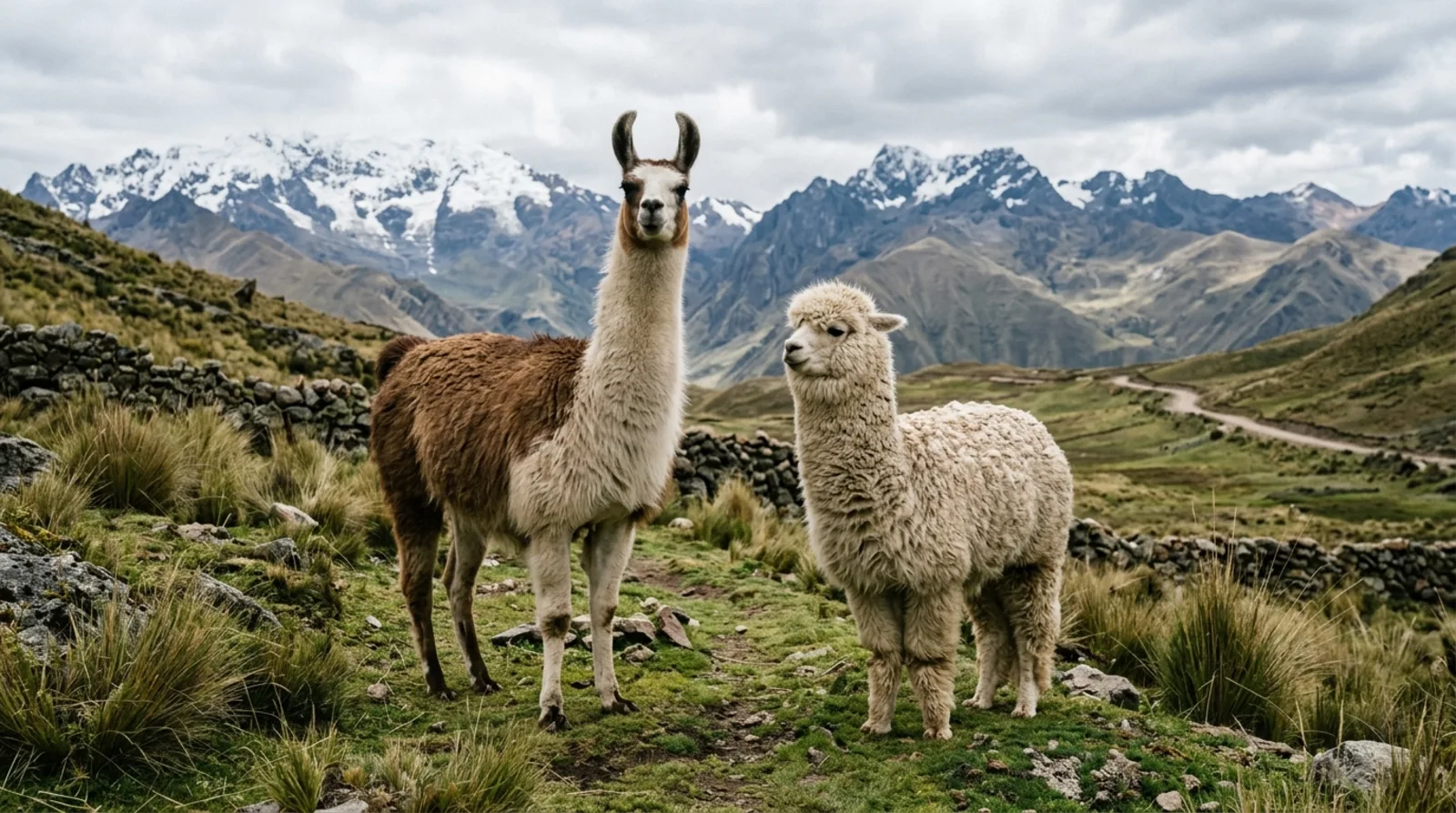
The short answer: a llama is a large pack animal, roughly 110–120 cm at the shoulder and 130–200 kg, with long banana-shaped ears and a long muzzle. An alpaca is half that size, about 90 cm and 45–80 kg, with short pointed ears and a short soft face, and is kept purely for its fleece. Both are South American camelids, and both can spit, though almost always at each other, not at people.
Five quick differences
| Llama | Alpaca | |
|---|---|---|
| Weight | 130–200 kg | 45–80 kg |
| Shoulder height | 110–120 cm | about 90 cm |
| Ears | long, curved like bananas | short, straight and pointed |
| Face | long muzzle, little fleece | short, with a fluffy topknot |
| Job | pack animal, carries up to 45 kg | fibre animal, shorn once a year |
The most reliable tell is the ears and the size: if the animal reaches your shoulder and its ears curve, it is a llama. If it is only slightly bigger than a sheep and looks like a fluffy teddy bear, it is an alpaca.
Whose wool is better?
No contest here: the fibre animal is the alpaca. A llama's coat has two layers, and the outer guard hair is coarse and prickly, above 30 microns, fit mostly for ropes and rugs. Alpaca fibre is single-coated and fine, typically 18–26 microns in our products, lanolin-free and partly hollow, which makes it lighter and warmer than sheep's wool. We explained what microns actually mean, and why baby alpaca rarely itches, in the fibre guide.
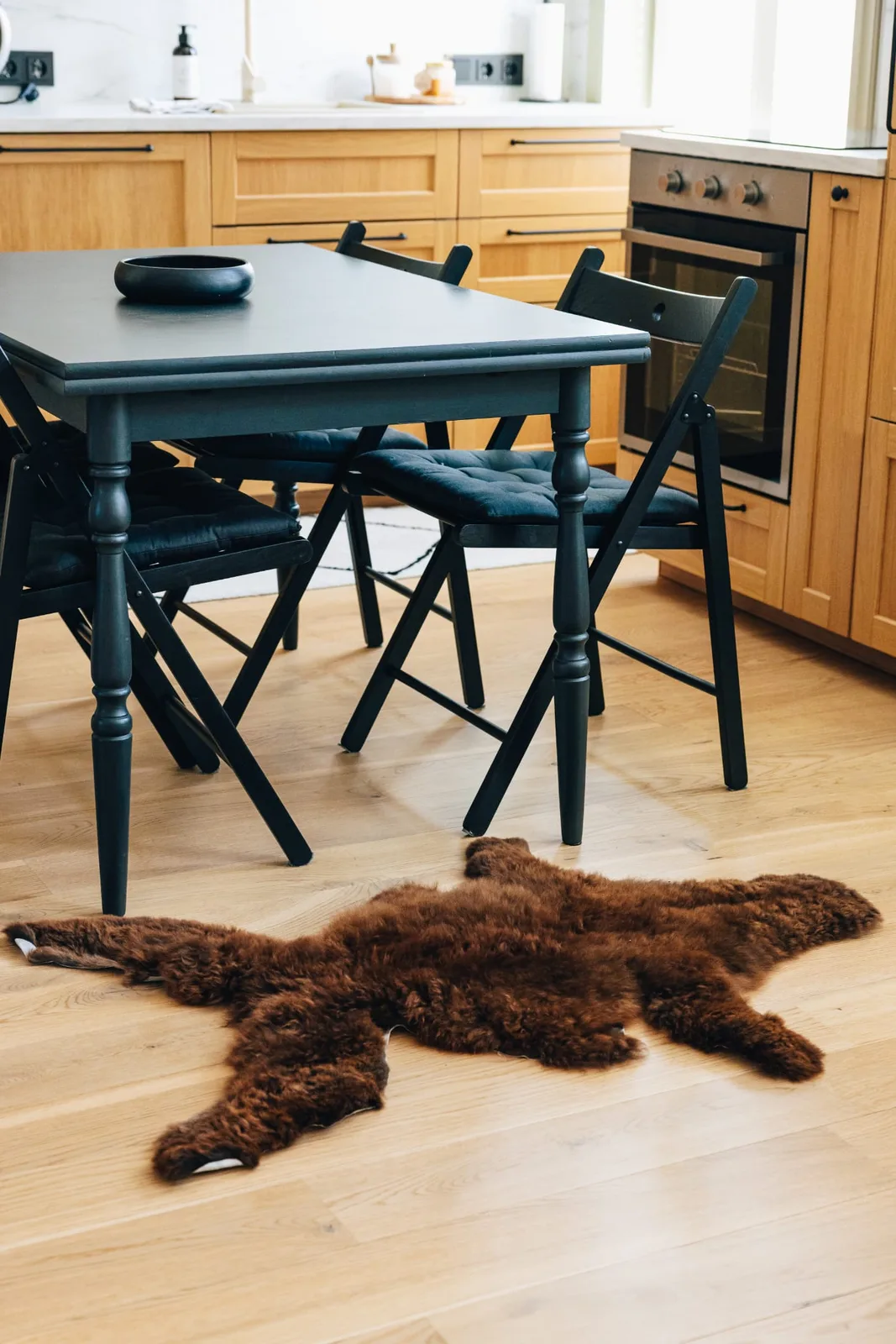
Everything we sell, from scarves to alpaca hides, is alpaca, not llama. We do not sell llama-wool products.
Do they spit?
Yes, both can, but almost always among themselves: spitting is camelid language for feeding order and personal space. An animal spits at a person only when it has been treated badly or feels cornered. On a farm visit one simple rule is enough: do not reach over the fence towards the animal's face; let it come to you.
By temperament the alpaca is the shyer, calmer herd animal; the llama is more independent and is even used elsewhere in the world as a guard animal for sheep flocks.
Where can you see alpacas?
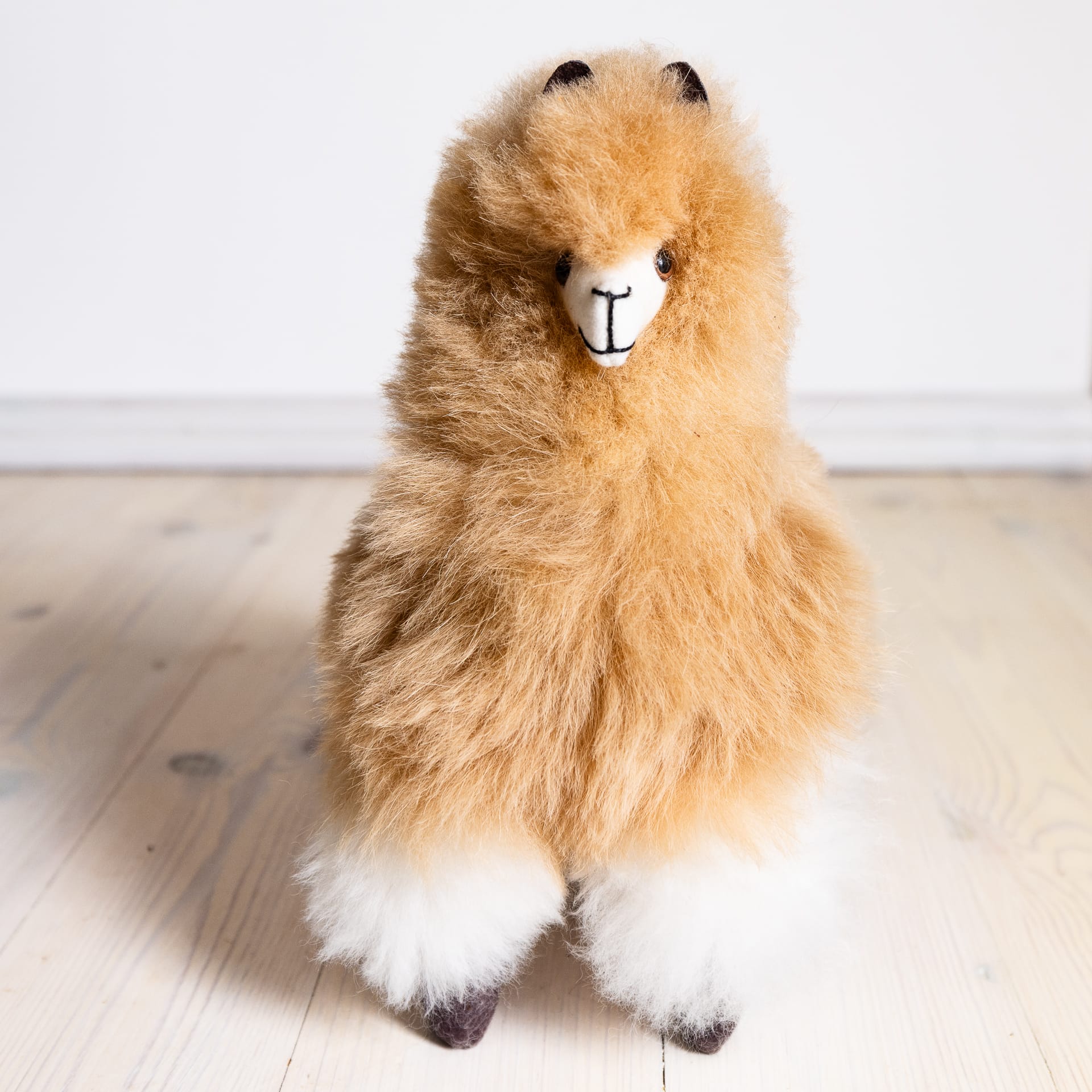
Alpaca farms now exist across the Nordics and Baltics, and alpacas cope with northern climates surprisingly well; nights in the Andes are colder than our winters. If keeping one is not an option, there is a middle ground: our alpaca fur figures and soft toys are made of real alpaca hide, with fur as silky as on the living animal.
Frequently asked questions
Can a llama and an alpaca have offspring together?
Yes. The cross is called a huarizo, and its fibre lands between the parents. In the wool trade the same word also names a coarser grade of alpaca fibre, above 26.5 microns.
Which is bigger, a llama or an alpaca?
The llama, by a wide margin: an adult llama weighs 130–200 kg, an alpaca 45–80 kg. A llama can carry a 45 kg load; alpacas are not used as pack animals.
Do alpacas spit at people?
Very rarely. Spitting is the herd’s internal language; it is aimed at people only when the animal feels threatened. On a calm farm visit it practically never happens.
Are alpaca wool products better than llama wool?
For softness, yes: alpaca fibre is uniformly fine, while llama guard hair is coarse. That is why garments are made of alpaca and llama wool mostly ends up in rugs. Our range carries only alpaca wool and alpaca hides.
Alpaca for your home: figures and soft toys
Real alpaca wool, straight from the Andes
Scarves, hats, socks and hides from Cusco artisans. We do not sell llamas, but you can take an alpaca home.