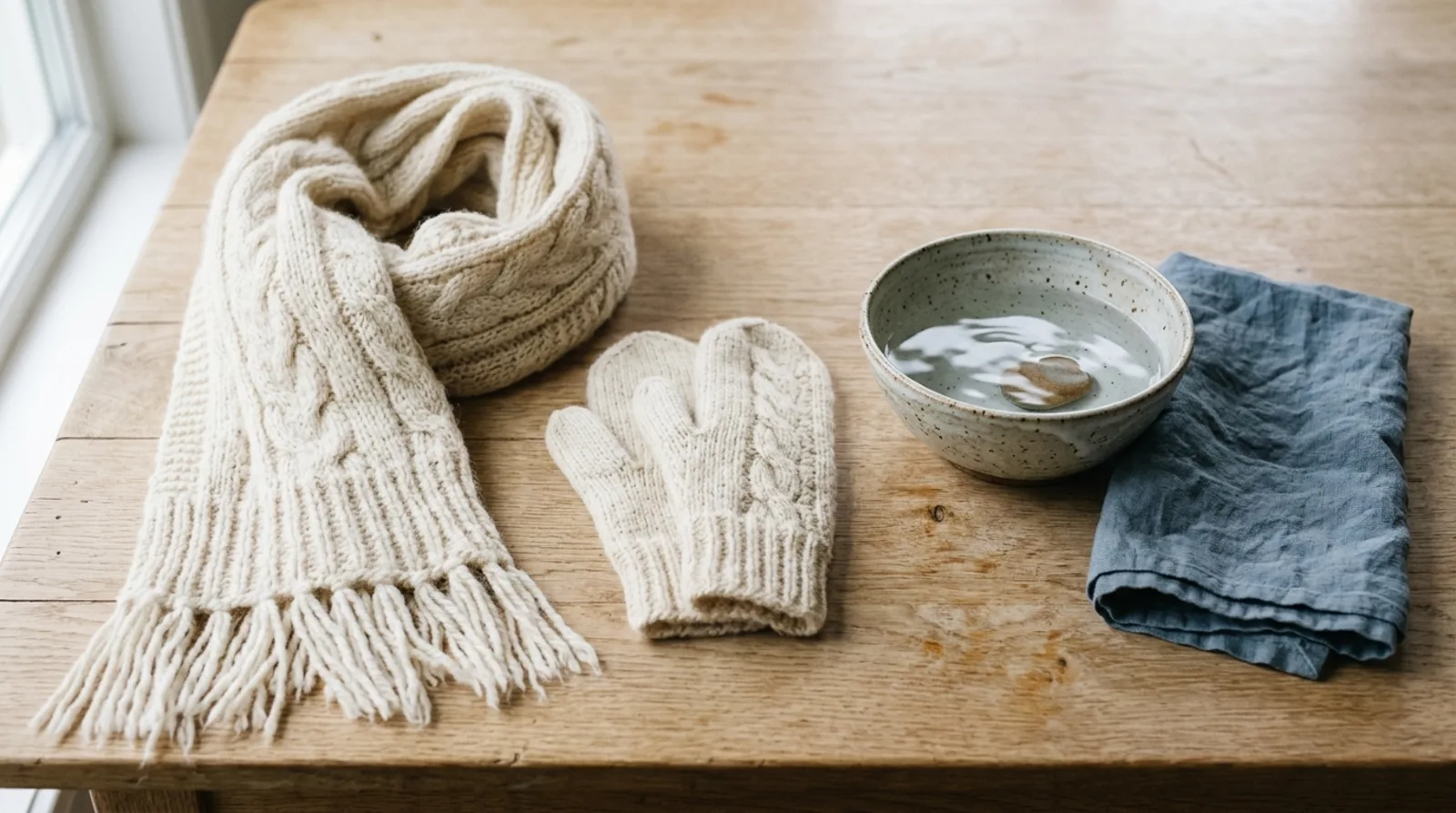
In short: wash alpaca knitwear by hand in lukewarm water (up to 30 °C) with wool detergent, do not wring, dry flat. Never wash an alpaca hide: shake it, air it, comb it and clean stains with a damp cloth. With good care both last for years, because alpaca fibre has no lanolin to attract dirt, and it does not felt as easily as sheep's wool.
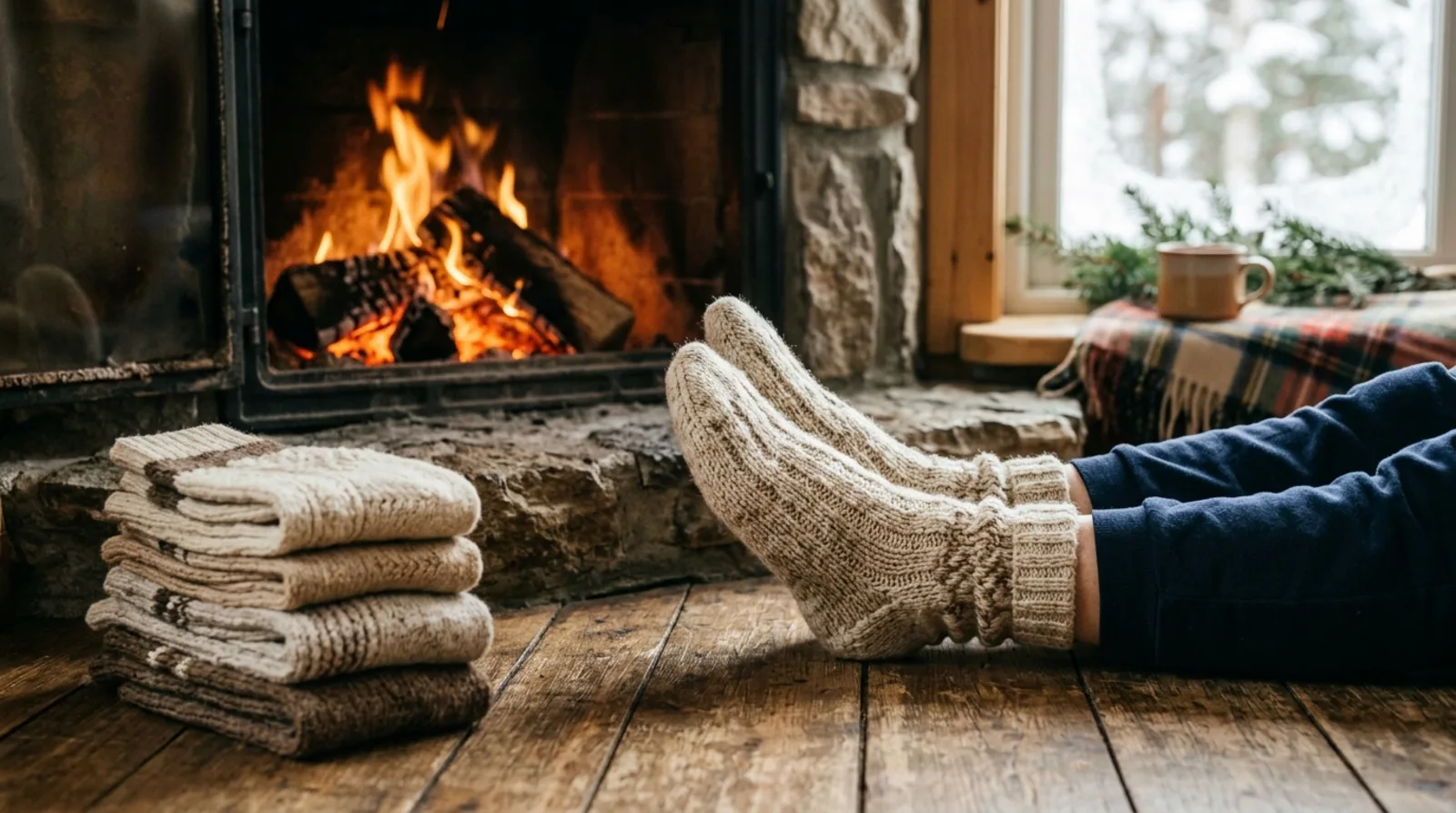
Alpaca knitwear: scarves, hats, gloves, sweaters
How often to wash
Less often than you think. Alpaca resists odours and dirt clings to it less, because the fibre has no wax. Hang the knit up to air after wearing; usually that is enough. Wash at the end of the season or when there is an actual stain.
How to wash
- Lukewarm water, up to 30 °C. Hot water and sudden temperature changes felt the fibre.
- Wool detergent or a mild shampoo, not ordinary washing powder (the enzymes eat protein fibre).
- Soak for 5 to 10 minutes, press gently. Do not rub or wring.
- Rinse in water of the same temperature.
- Squeeze the water out by rolling in a towel.
- Dry flat, shaping by hand as you go. Not on a hanger, not on a radiator, not in the sun.
Machine washing on a wool cycle is possible in a laundry bag with no spin, but hand washing is safer. We do not recommend putting a baby alpaca sweater in the machine.
Pilling and loose fibres
A new alpaca knit may shed a little at first; these are fibres cut short in shearing and they disappear after a few wears. Alpaca rarely pills; if it does, remove the pills with a comb or a fabric shaver, not by pulling with your fingers.
Storing
Folded, not on a hanger (the knit stretches). Clean, because moths come for sweat and food stains. Cedar or lavender on the shelf helps, a sealed bag in summer even more. Air it once over the summer.
Baby alpaca fur: hats, slippers, cushion covers, soft toys
A fur hat or slippers are never washed. The fur stays clean for a long time, and tanned hide does not tolerate water.
- Shake and air outdoors, in the shade. Cold dry air refreshes fur best.
- Comb with a wide-toothed comb in the direction of growth.
- Stains: damp cloth, a drop of mild soap, dab, let dry at room temperature.
- A hat that has got wet dries at room temperature, away from any heat source. Heat makes the hide brittle.
- The fluffy fur of a cushion cover rises again with a shake; if it has flattened, help it with a comb.
An alpaca hide on the floor, a chair or by the bed
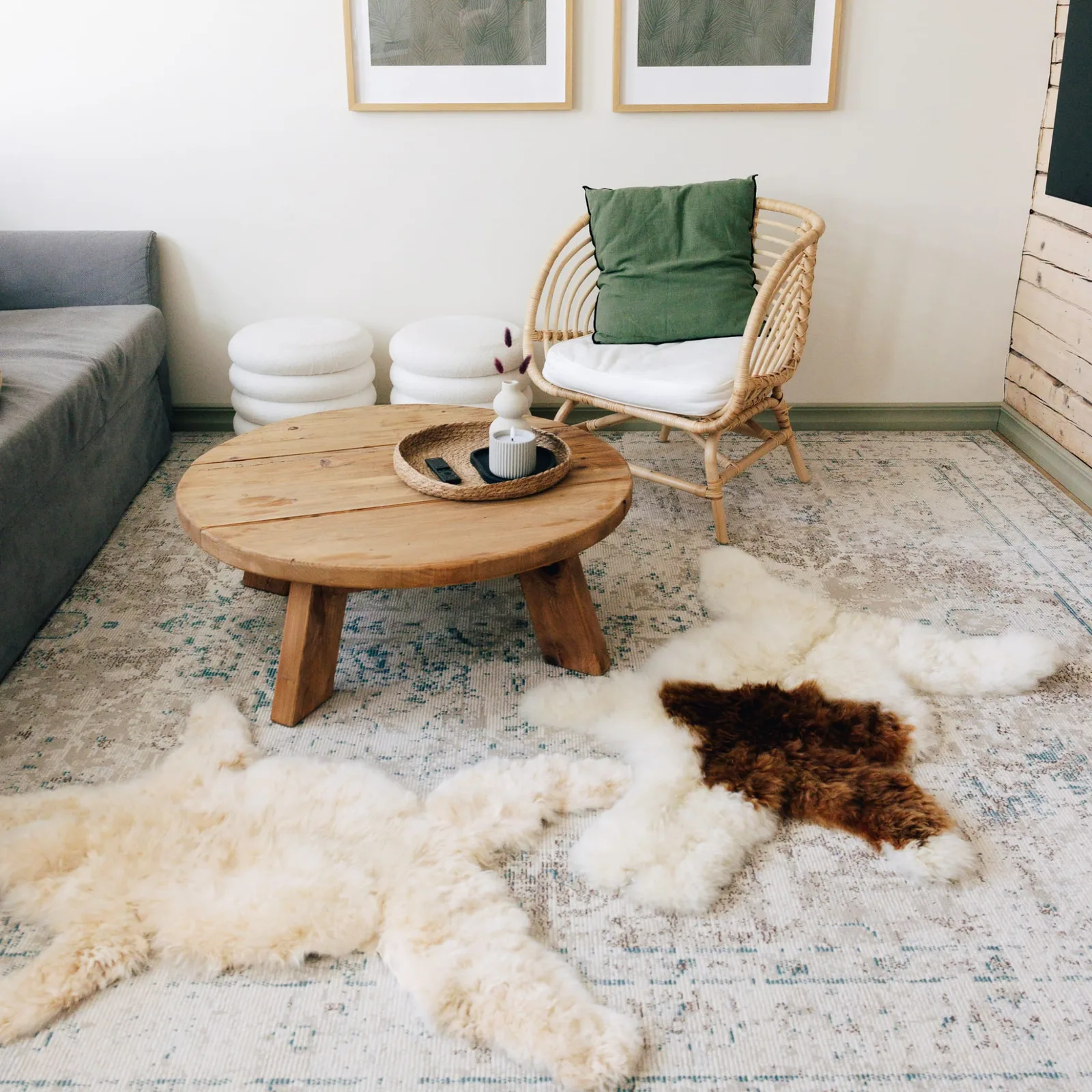
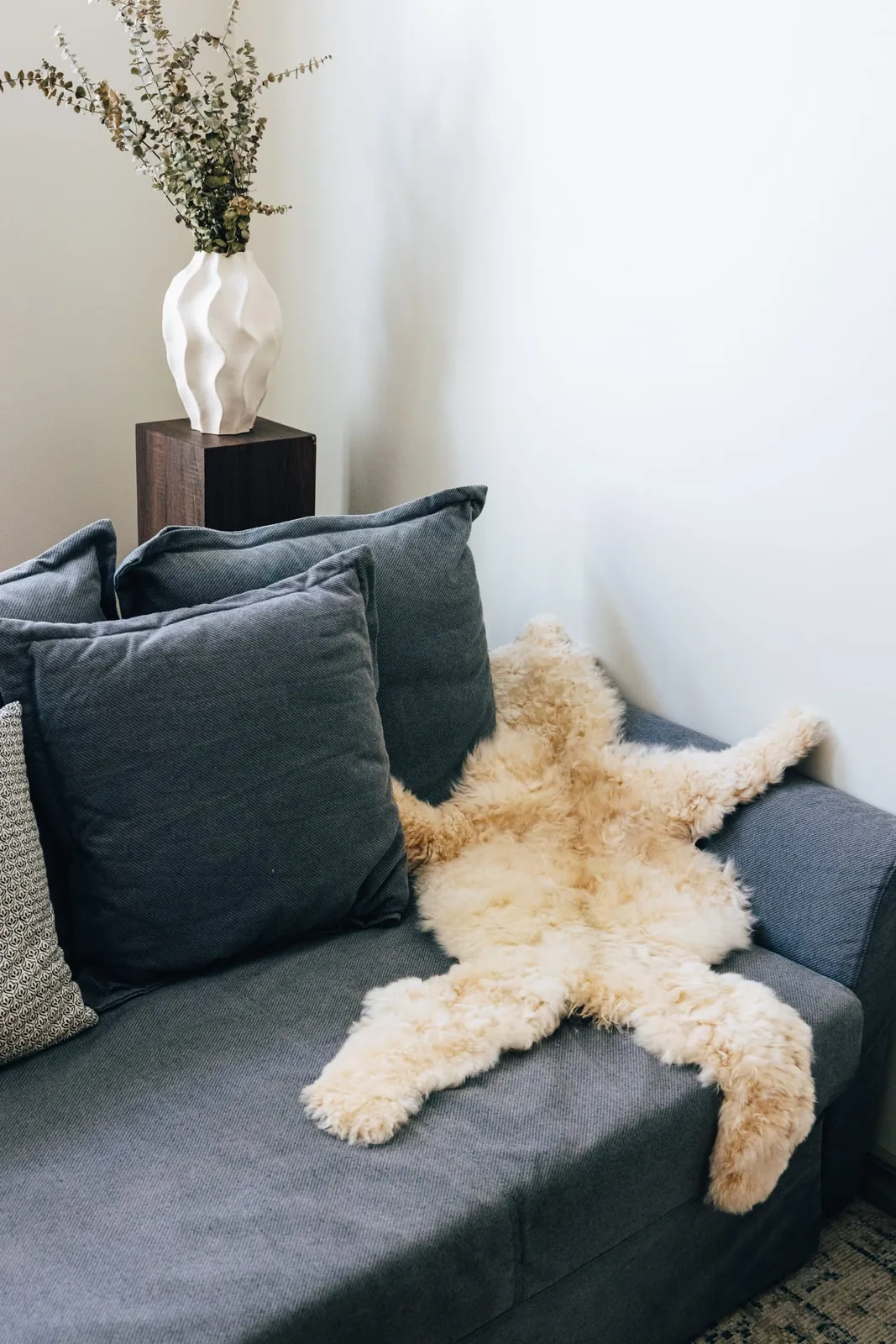
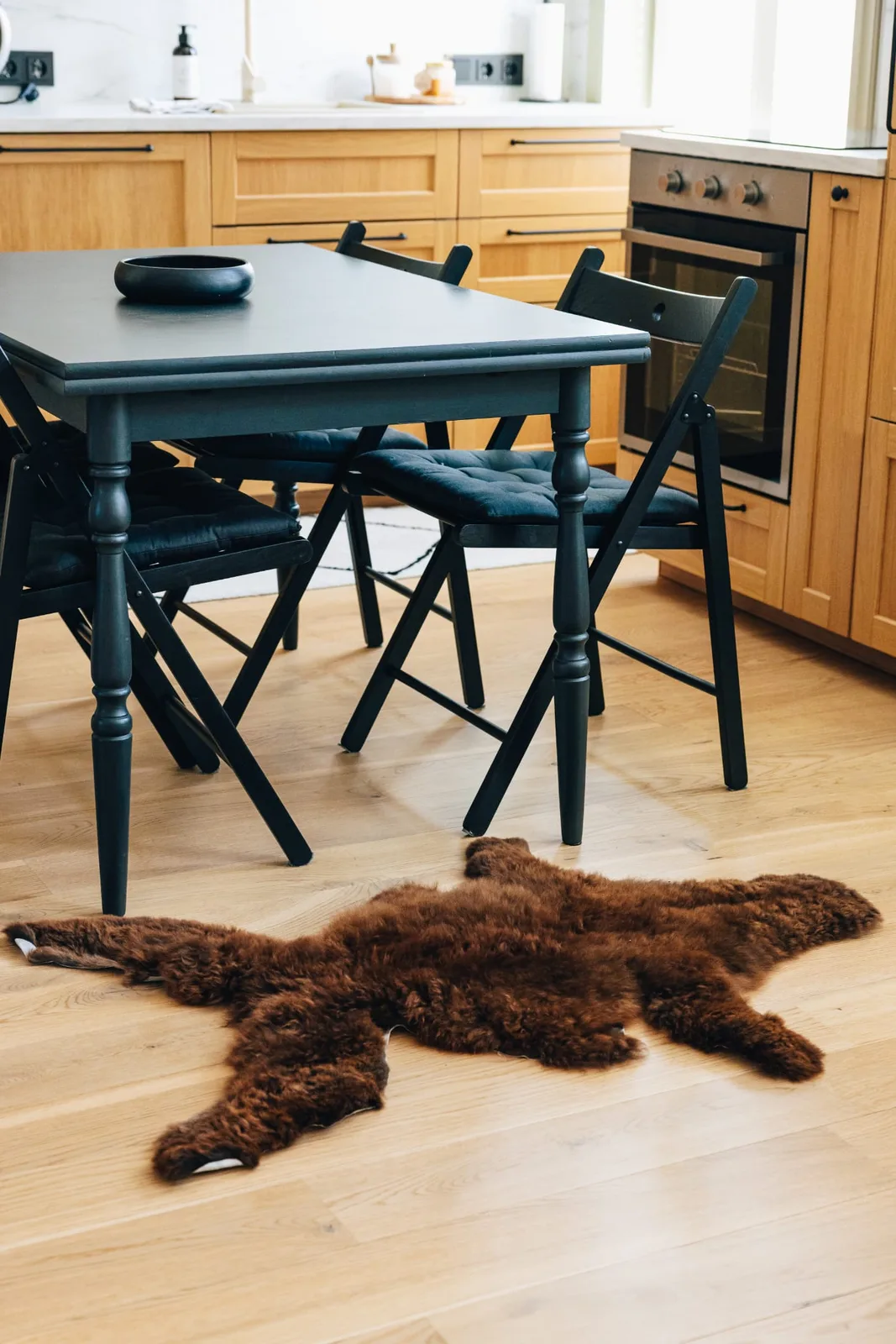
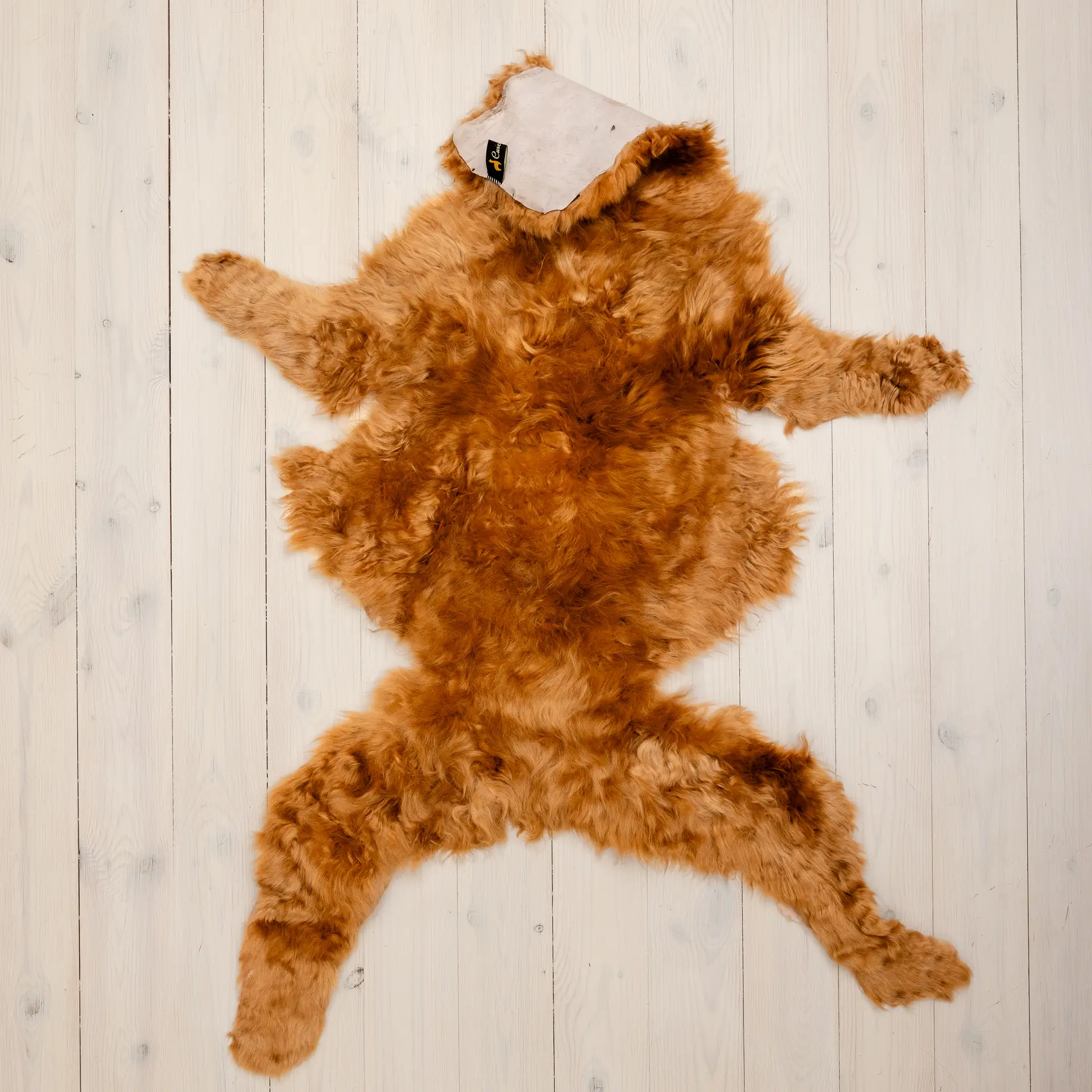
An alpaca hide is the least demanding item on this list, as long as you remember three rules: no water, no heat, no direct sun.
| Situation | What to do | What not to do |
|---|---|---|
| Everyday | shake, air, comb once a month | vacuum with a rotating brush |
| Dust | vacuum on low power, no brush, with the fur | beating |
| Stain | damp cloth + mild soap, dabbing, straight away | washing machine, dry cleaning |
| Wet | dry flat at room temperature, fur side up | radiator, hairdryer, sun |
| Summer | keep dry, dark, in a cotton bag | plastic bag |
Sun bleaches the fur and dries out the hide. If the hide is on a chair under a window, turn it now and then. Combing keeps the fur fluffy and removes loose fibres, which every natural hide has a few of at first.
How to clean an alpaca fur rug, and why a sheepskin guide does not apply
Most pages on how to clean a sheepskin rug are wrong for alpaca. Some sheepskins are tanned to survive a 30 °C wool wash in the machine. An alpaca hide never is: the leather stiffens and the fibre mats. To clean an alpaca fur rug:
- Shake it out outdoors, fur side down.
- Air it in the shade for a couple of hours. Cold dry air freshens the fur better than any product.
- Comb once a month with a wide-toothed comb, in the direction of growth.
- Stain: a damp cloth and a drop of mild soap, dab from the edge inwards. Do not rub.
- Dust: vacuum on low power, no rotating brush, with the fur.
- Never the washing machine or the tumble dryer, never a radiator or direct sun.
After a spill, blot straight away with a paper towel, do not pour water on it, and let the hide dry at room temperature, fur side up. A dried stain comes off with soapy water on a cloth, worked on the fur only, never soaked into the leather. An old grease or wine stain, a strong smell or fur that has matted flat is a job for a fur cleaner who works dry. Ordinary dry cleaning ruins the leather.
Which hide suits a floor and which a chair is on the alpaca hides page; the longer comparison with sheepskin is in its own article.
Frequently asked questions
Can alpaca wool go in the washing machine?
On a wool cycle, cold, in a laundry bag and with no spin it is possible, but every machine is different and one mistake felts the knit for good. Hand washing is safer and takes ten minutes.
What if an alpaca knit has felted?
Soak in lukewarm water with a couple of tablespoons of hair conditioner for 30 minutes, then gently stretch to the right size and dry flat. A lightly felted knit recovers; a heavily felted one cannot be saved.
How do I protect an alpaca hide from moths?
Moths go for dark, warm, still air. Keep the hide in use or air it once a month in summer, store it in a cotton bag with cedar or lavender. If in doubt, put the hide in a double bag in the freezer for 48 hours.
Does an alpaca hide shed?
A new hide lets go of a few short fibres at first; this stops within a couple of weeks and combing speeds it up. Continuous shedding is not typical of an alpaca hide, unlike reindeer hide for example.
Alpaca hides and hats in the shop
Every product has a short care line; the longer guide is this article.