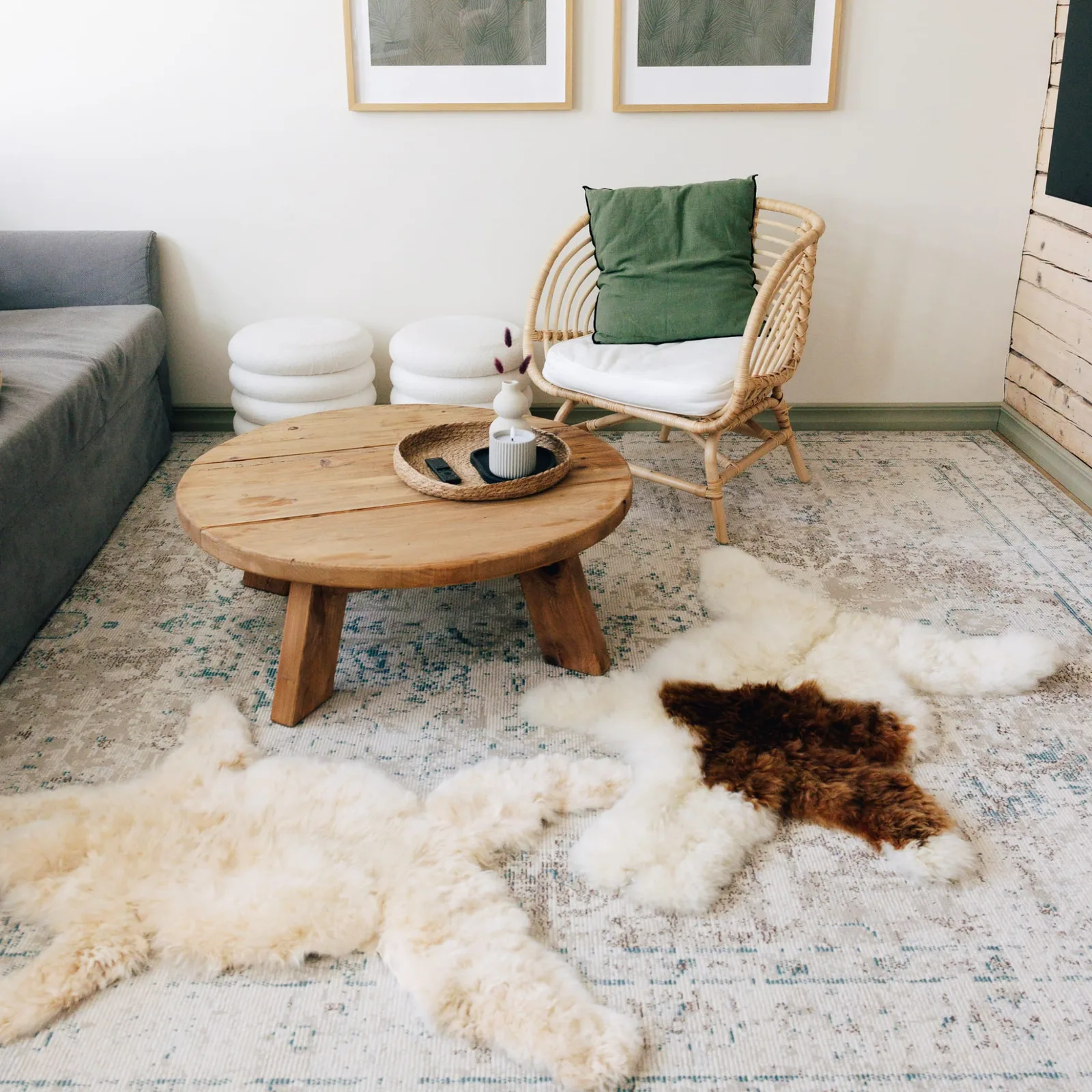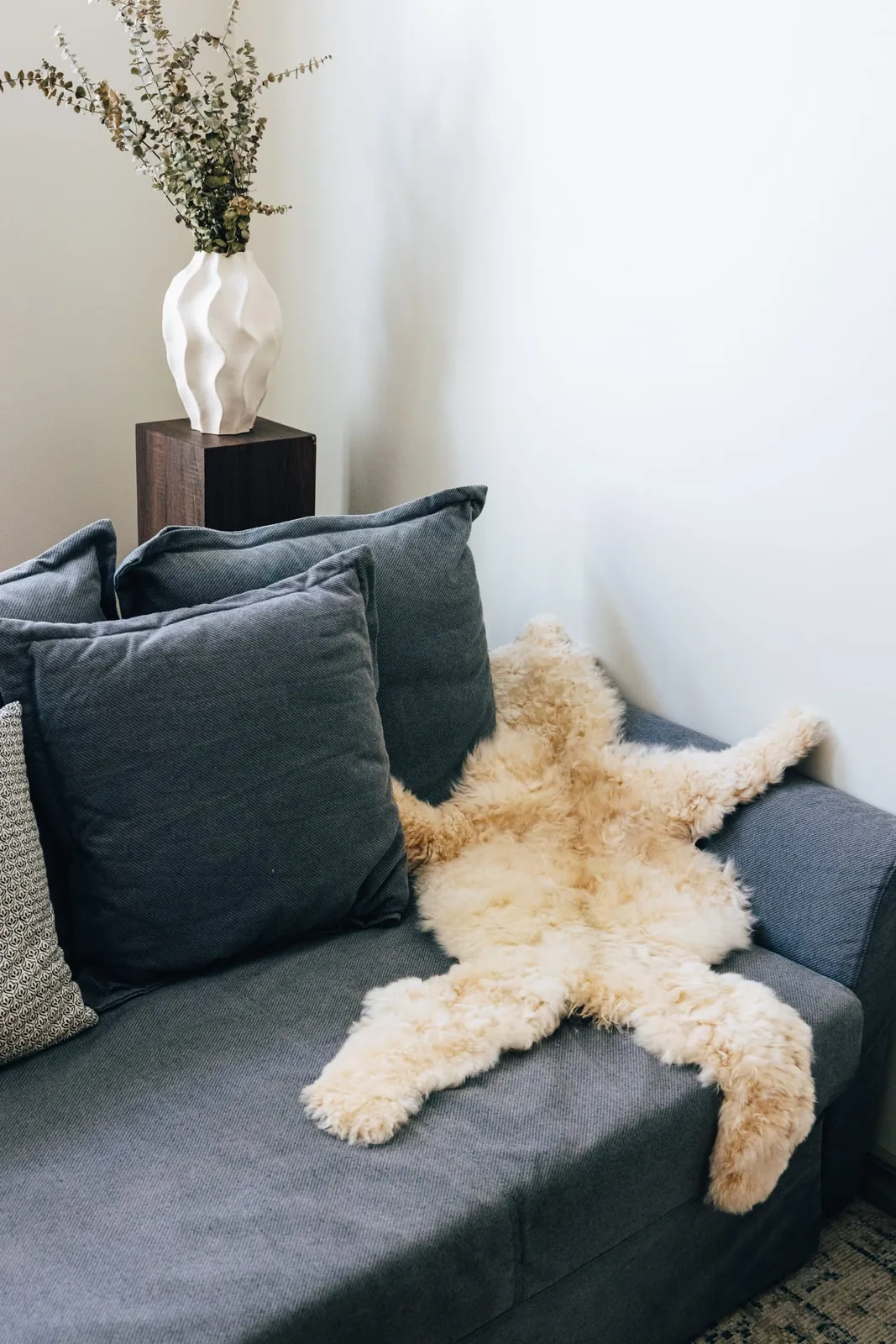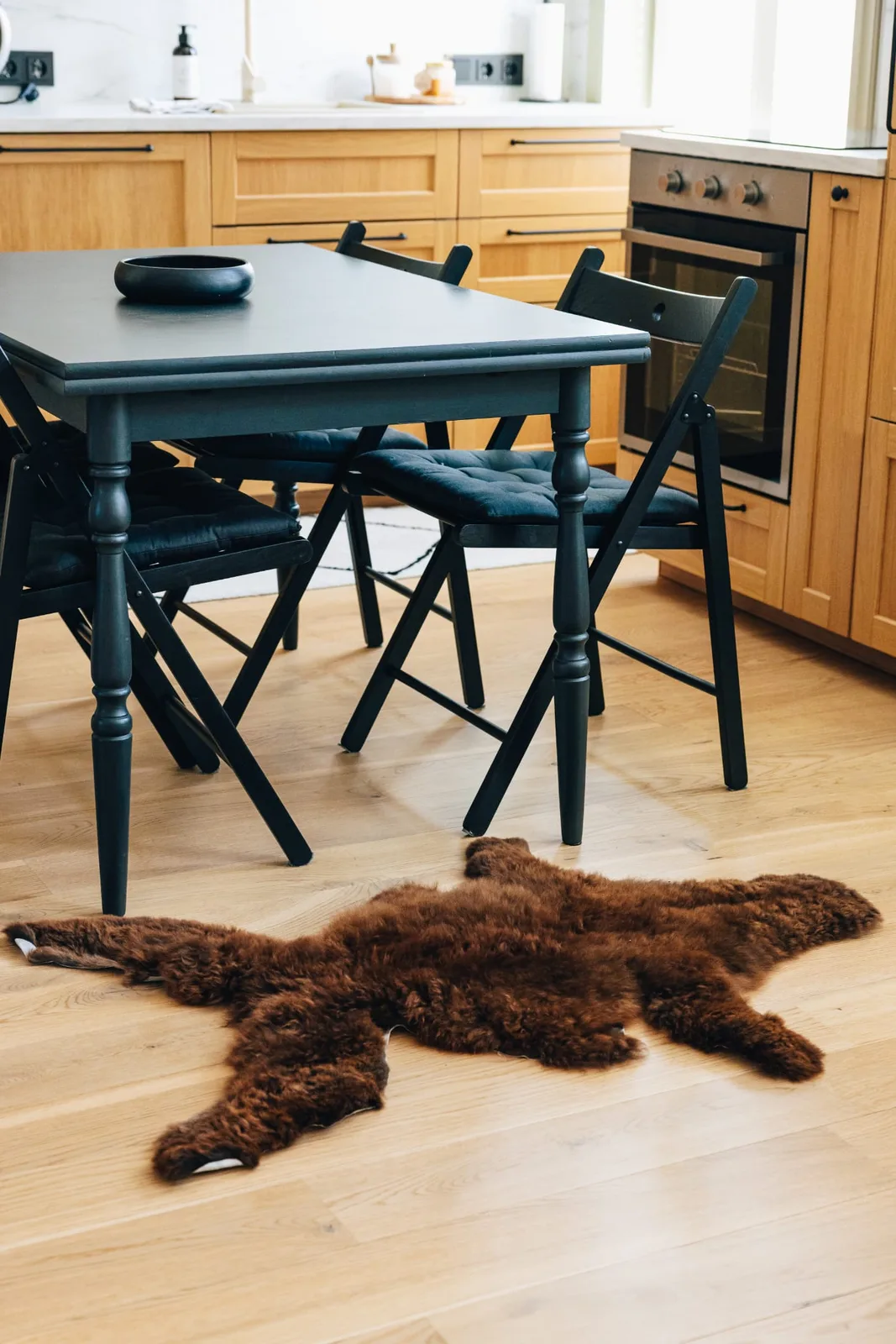
The short answer: sheepskin is the most common and cheapest, and tolerates washing. Reindeer hide is the warmest seat pad outdoors, but sheds constantly and does not belong on an indoor floor. Alpaca hide is the lightest and silkiest, lanolin-free, sheds little and belongs exactly where the hide is touched: a chair, beside the bed, a child's room. Below are the numbers and where our hides come from.
Three hides side by side
| Alpaca hide | Sheepskin | Reindeer hide | |
|---|---|---|---|
| Fur | long, straight, silky, 5 to 12 cm | curly, dense, 3 to 8 cm | short, stiff, hollow |
| Feel | cool smooth silk | warm wool | coarse, bristly |
| Weight (approx. 100 cm) | light, under 1 kg | medium, 1 to 2 kg | medium |
| Lanolin | no | yes | no |
| Shedding | minimal | low | constant (hollow hair breaks) |
| Washing | no, dry care only | some hides at 30 °C | no |
| Best place | chair, bedside, child's room, wall | floor, sofa, car | sauna, terrace, hiking |
| Price | 119 to 249 € at Alpaca Nord | typically 40 to 150 € | typically 130 to 200 € |
The prices are the ranges we see ourselves in Estonian and Nordic shops; with sheepskin the price varies most with quality.
When to choose an alpaca hide
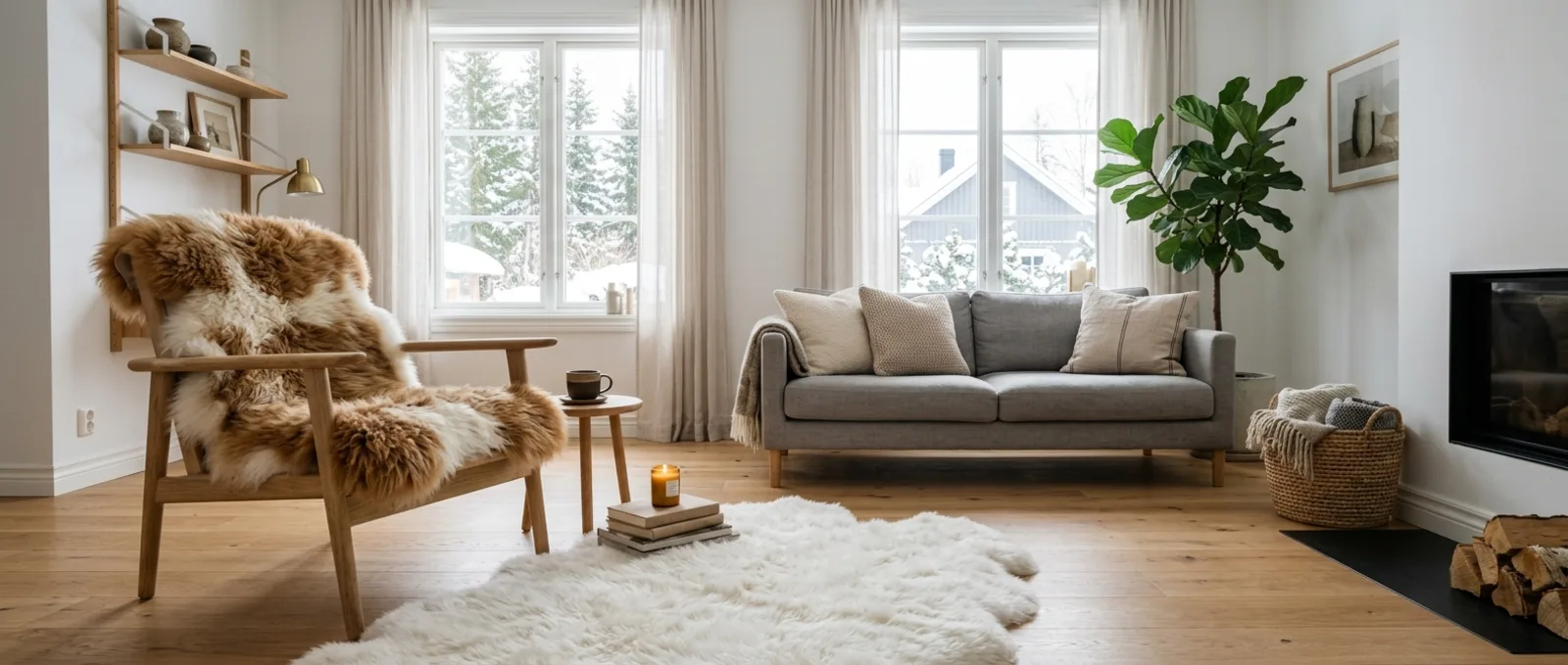
An alpaca hide is the choice when it is touched with bare skin or sits in a child's room. No lanolin means it has no woolly smell and is gentle on sensitive skin; the long, straight fur does not mat the way sheepskin curls do. The smaller baby alpaca hide (up to 90 × 60 cm) fits a chair seat or a footstool, the medium (up to 100 × 65 cm) covers an armchair, and the young alpaca hide (up to 110 × 75 cm) suits a bedside or a bench.
Sheepskin wins where the hide lies on a floor with foot traffic and has to survive washing. Reindeer hide wins outdoors: no other hide keeps a cold bench so warm, but indoors it leaves hairs behind every time you sit.
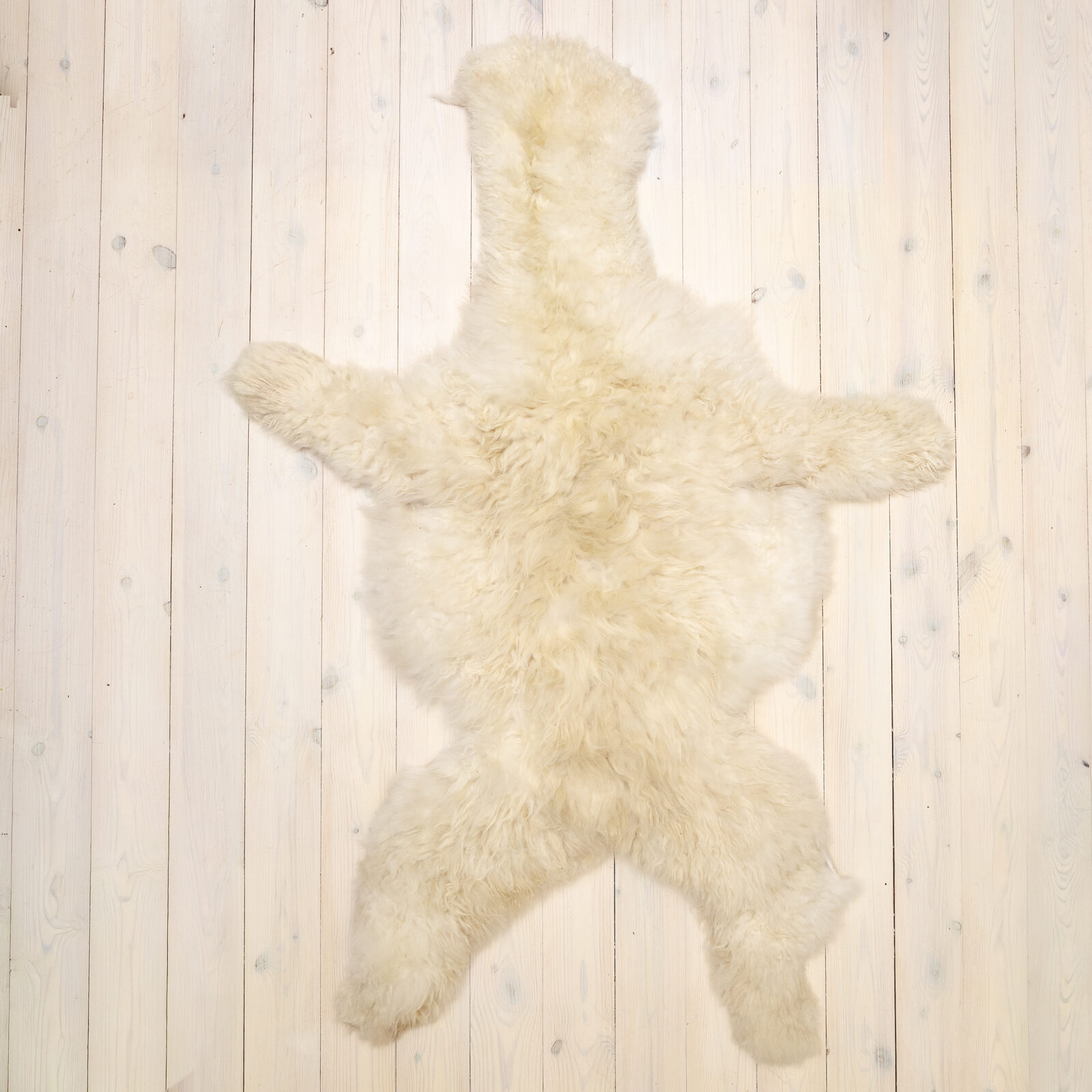
Where our alpaca hides come from
This is the question we are asked most. We buy our hides direct from Cusco Stores in the Cusco region of Peru, and Alpaca Nord is Cusco Stores' official EU partner. That goes for every product in the alpaca hides category. More about us.
The hide is tanned traditionally, the back stays supple and the fur stays put. Each hide is from one animal, so the size and colour pattern always vary a little; the product page lists the maximum dimensions.
Sizes and where they fit
| Hide | Up to | Suits | Price |
|---|---|---|---|
| Baby alpaca, small | 90 × 60 cm | chair seat, stool, window seat, shelf | 119 € |
| Baby alpaca, medium | 100 × 65 cm | armchair, nursery corner, wall | 139 € |
| Young alpaca | 110 × 75 cm | bedside, bench, sofa back | 249 € |
Frequently asked questions
Is an alpaca hide warmer than sheepskin?
Weight for weight, yes: alpaca fur is partly hollow and holds more air. The dense curly wool of a sheepskin is a thicker layer, though, so on the floor they feel similar. As a seat pad outdoors, reindeer hide is warmer than both.
Can an alpaca hide go in a child's bed?
No. We do not recommend hides, fur or soft toys anywhere a baby or small child sleeps, their bed included. In a child's room an alpaca hide works as decor: on a chair, on the wall or in a floor corner.
How do I clean an alpaca hide?
Shake it, air it in the shade, comb with a wide-toothed comb. Dab stains with a damp cloth and mild soap. Do not wash, do not heat. The longer guide is in our care article.
Why is every alpaca hide different?
Because each hide is from one animal. Colour, pattern and exact size vary; the product page lists the maximum dimensions and colour options, and we send a photo of the specific hide before dispatch if you ask.
Alpaca hides in the shop
All alpaca hides on one page
Three sizes, natural colours, direct from Cusco Stores in Peru.