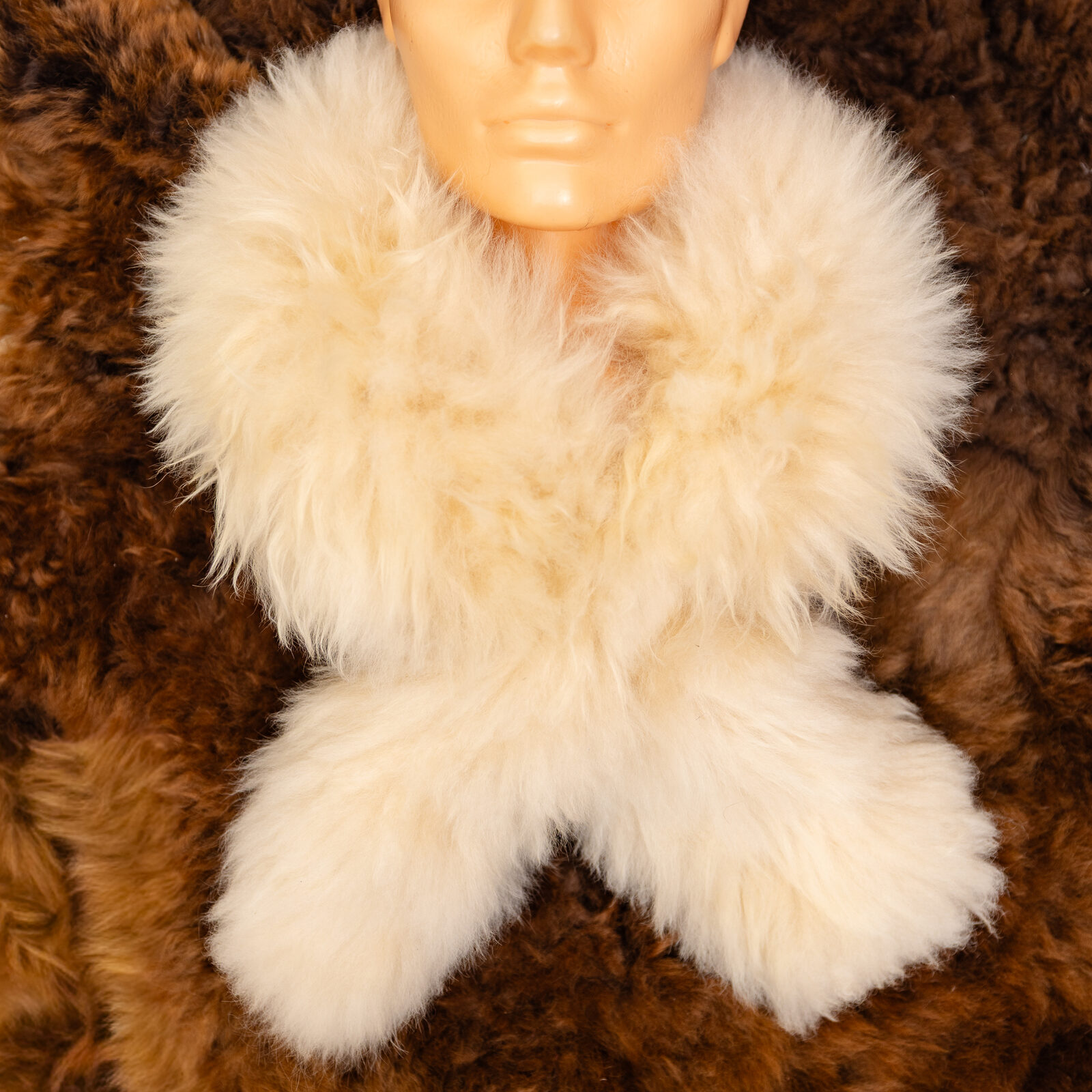
Narrow Alpaca Fur Scarves, 100×4 cm
€79
Alpaca wool scarves are light and warm and rarely itch, because baby alpaca fibre is typically 22.5 microns or finer. The range has baby alpaca scarves 170 × 30.5 cm for everyday wear, fringed shawls 70 × 198 cm that also work as a cape, and narrow alpaca fur scarves to tuck inside a coat collar. An alpaca scarf keeps you warm without bulk: you get the same warmth from half the thickness of sheep's wool. Pairs with alpaca hats and gloves. Why alpaca is warmer than merino is explained in our fibre guide.
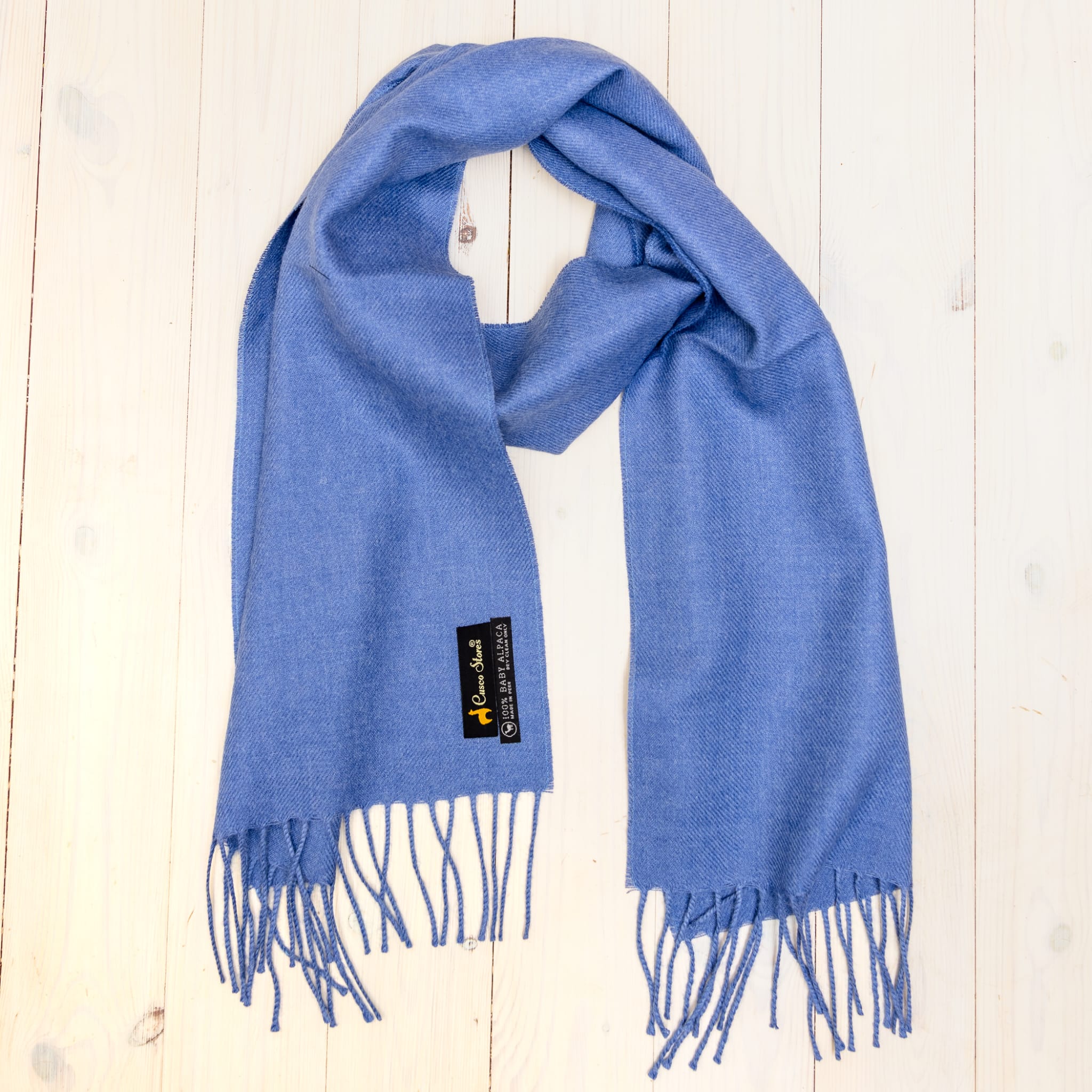
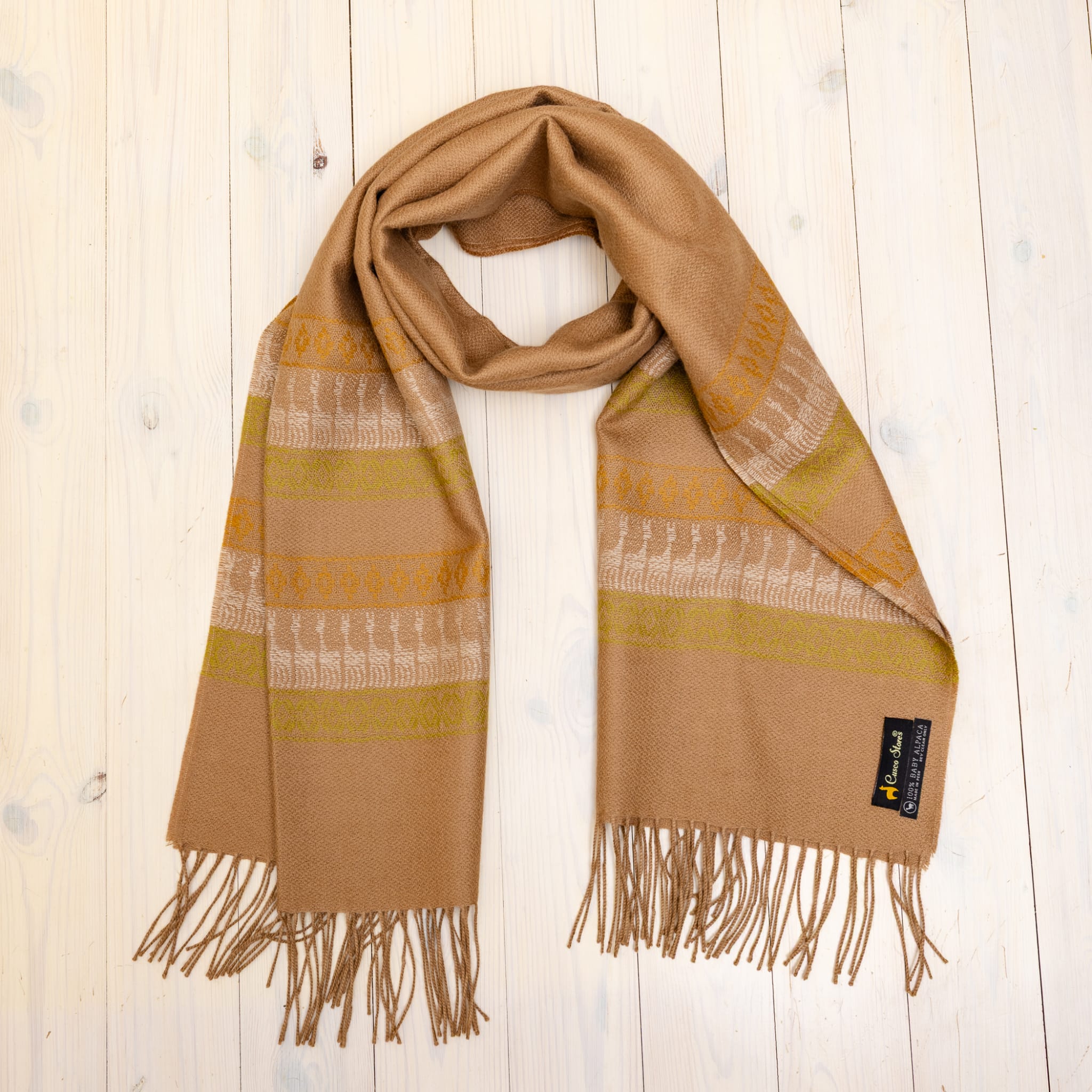
Alpaca fibre is partly hollow and traps air, so a thin scarf warms like a thick woollen one. There is no lanolin in alpaca, so the scarf resists odour, is gentle on the sensitive skin of the neck and rarely needs washing. The smooth fibre pills and felts less readily than sheep's wool. Baby alpaca is not the animal's age but the fineness grade of the fibre, and that is what makes the scarf silky.
The scarves are knitted in the Cusco region of Peru, where alpaca craft is a centuries-old tradition. The fleece comes from animals on the high Andean plateau, shorn once a year. We have worked with the same partners from the start, read our story.
Air it after wearing, wash rarely and by hand: lukewarm water up to 30 °C, wool detergent, no wringing, dry flat. Store folded, not on a hanger. The full guide, including how to rescue a felted knit, is in our care article.
At the same weight, alpaca, thanks to the hollow fibre. Merino wicks moisture slightly better, so for sport either works; in town and in winter alpaca wins.
Rarely. The prickly feeling usually starts with fibres over 30 microns, and the fibre in our scarves is typically 22.5 microns or finer.