Good wool socks are chosen by three things: the fibre (alpaca, merino or sheep's wool), the thickness (for a shoe, a boot or the sofa) and the size (a wool sock should not be too big, because it stretches with wear). The fibre decides whether the sock itches and whether it smells after a long day; the thickness decides where it fits. All three choices in numbers below.
Material: alpaca, merino or sheep’s wool
| Alpaca | Merino | Sheep’s wool | |
|---|---|---|---|
| Warmth per weight | highest (hollow fibre) | medium | medium |
| Moisture | repels, dries fast | absorbs up to 30 % | absorbs |
| Smell after a long day | minimal | slight | noticeable |
| Itch | rarely itches (under 26 µm) | rarely itches | itches for some |
| Durability | high | medium, needs synthetics | high |
| Lanolin | no | yes | yes |
Alpaca fibre is partly hollow like reindeer hair, so it holds more warmth per gram than merino, and since the fibre carries no lanolin it is also gentle on wool-sensitive skin. We explained why in the fibre guide. Against cold toes, alpaca is, as far as we know, the best natural answer.
Thickness: which sock goes where
Our socks are knitted from alpaca yarn in three thicknesses, and the right choice depends on the footwear going over them:
| Sock | Price | Fits |
|---|---|---|
| Thin alpaca socks | 22 € | regular shoes, the office, daily wear |
| Medium alpaca socks | 27 € | winter boots, hiking boots, cool evenings at home |
| Extra-thick alpaca socks | 32 € | wellies, hunting and fishing, instead of slippers at home |
Rule of thumb: if the sock goes into a closed shoe, pick the thinner one; otherwise the shoe gets tight and the foot freezes anyway, because compressed wool no longer holds the air that keeps the warmth in. For truly cold floors there are also baby alpaca fur slippers.
Size: your usual size, never bigger
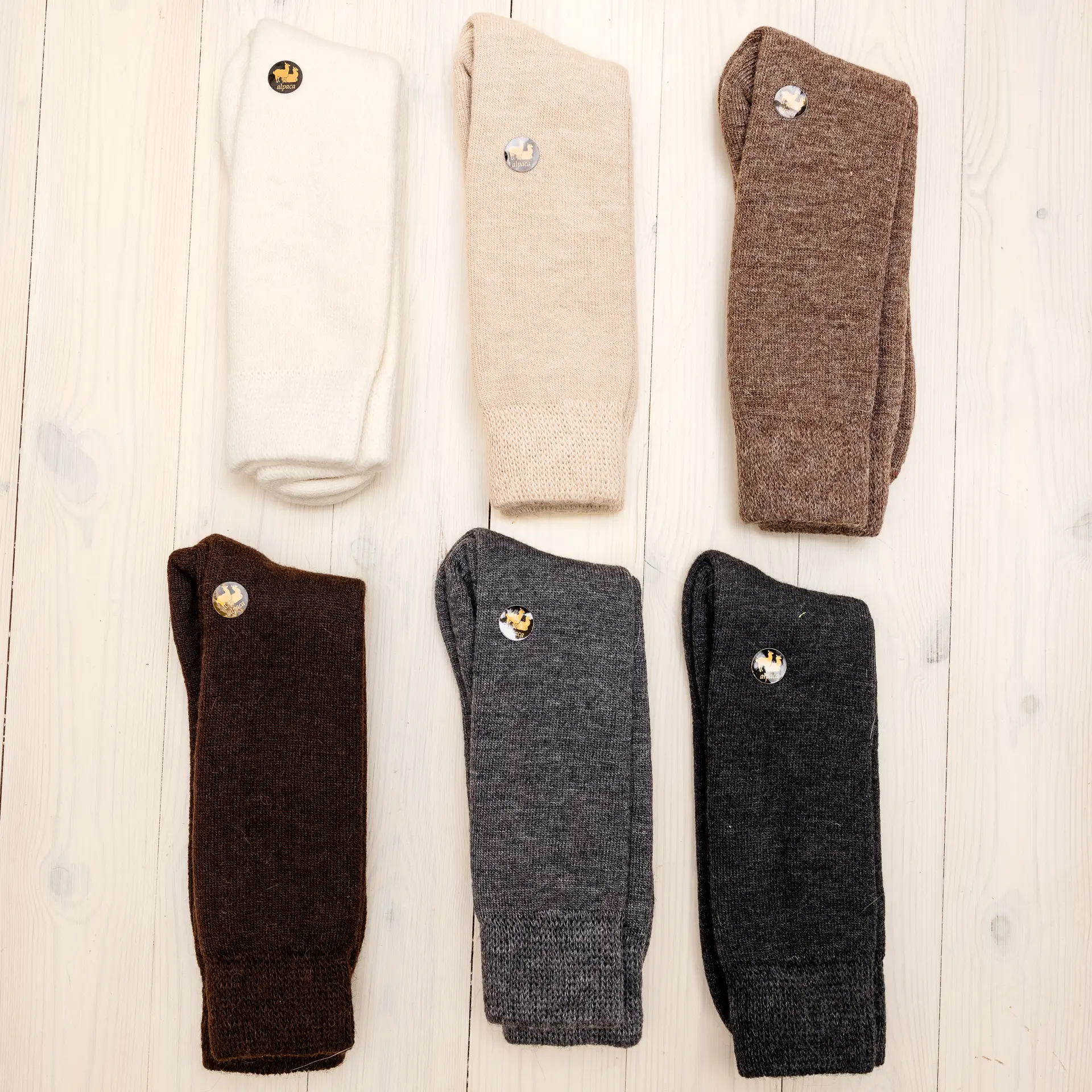
A knitted wool sock stretches about half a size with wear and moulds to the foot. So choose your normal size, or the smaller one if you sit between sizes, never the larger: an oversized sock creases inside a boot and rubs. There is no breaking-in period; a wool sock is soft from day one.
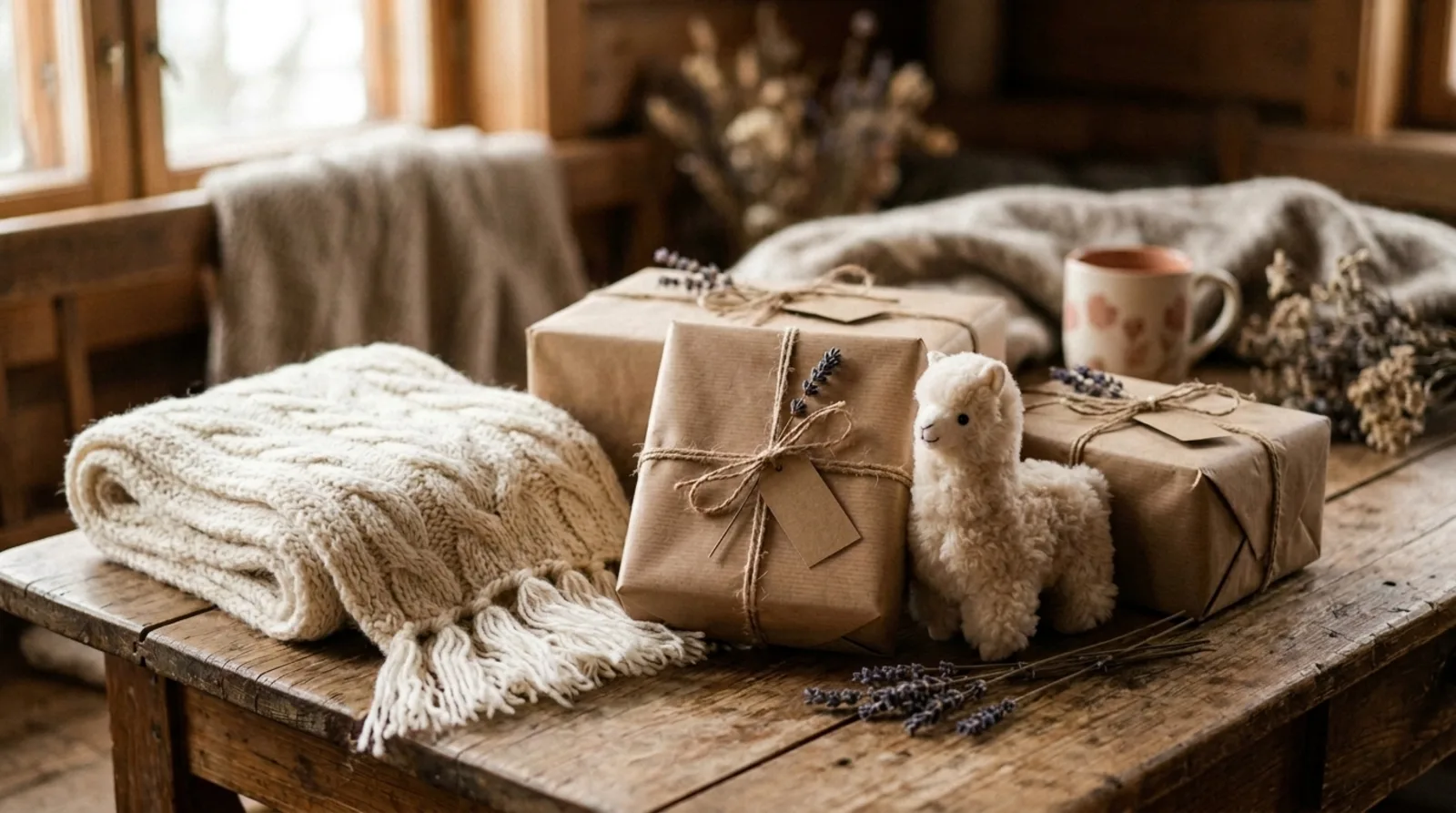
Buying as a gift? Of the three thicknesses the middle one is safest: it works in a boot and at home alike. The rest of the gift question we thought through in the gift ideas article.
So the socks last for years
Wool socks do not need washing after every wear: alpaca fibre holds little smell, so airing is usually enough. When you do wash, do it by hand or on a wool cycle at up to 30 °C, with wool detergent, no spin, and dry flat. Radiators and tumble dryers felt wool permanently. The full guide is in the care article.
Frequently asked questions
Do alpaca socks itch?
Rarely. Our sock yarn is typically under 26 microns, and most people only start to feel wool itch at around 30 microns. Alpaca also has no lanolin, the wool wax in sheep's wool that some people react to.
Do wool socks work in summer too?
The thin ones do: wool moves moisture and breathes better than cotton, so the foot does not get clammy. Hikers wear wool socks year-round for exactly this reason.
Can wool socks go in the washing machine?
On a wool cycle at up to 30 °C, in a wash bag and without spinning, yes. Hand washing is safer: ten minutes in lukewarm water with wool detergent, then flat drying.
Why do alpaca socks cost more than supermarket socks?
The fibre is dearer (alpacas are shorn once a year and fine fibre is scarce) and our socks are hand-knitted in Peru. Cared for properly they last years, so the price per wear ends up lower than a cheap sock’s.
Alpaca socks in the shop
Three thicknesses, one fibre
Alpaca yarn socks from thin to extra-thick, hand-knitted in Peru.